top of page
Reimagining Historical Voices

Search


Giovanni Bardi Discussing Good and Bad Singing in a Letter to Giulio Caccini (c.1578)
I become nauseated when I recall some singers I have heard, whether solo or accompanied by others, improvising on a choirbook, not caring...
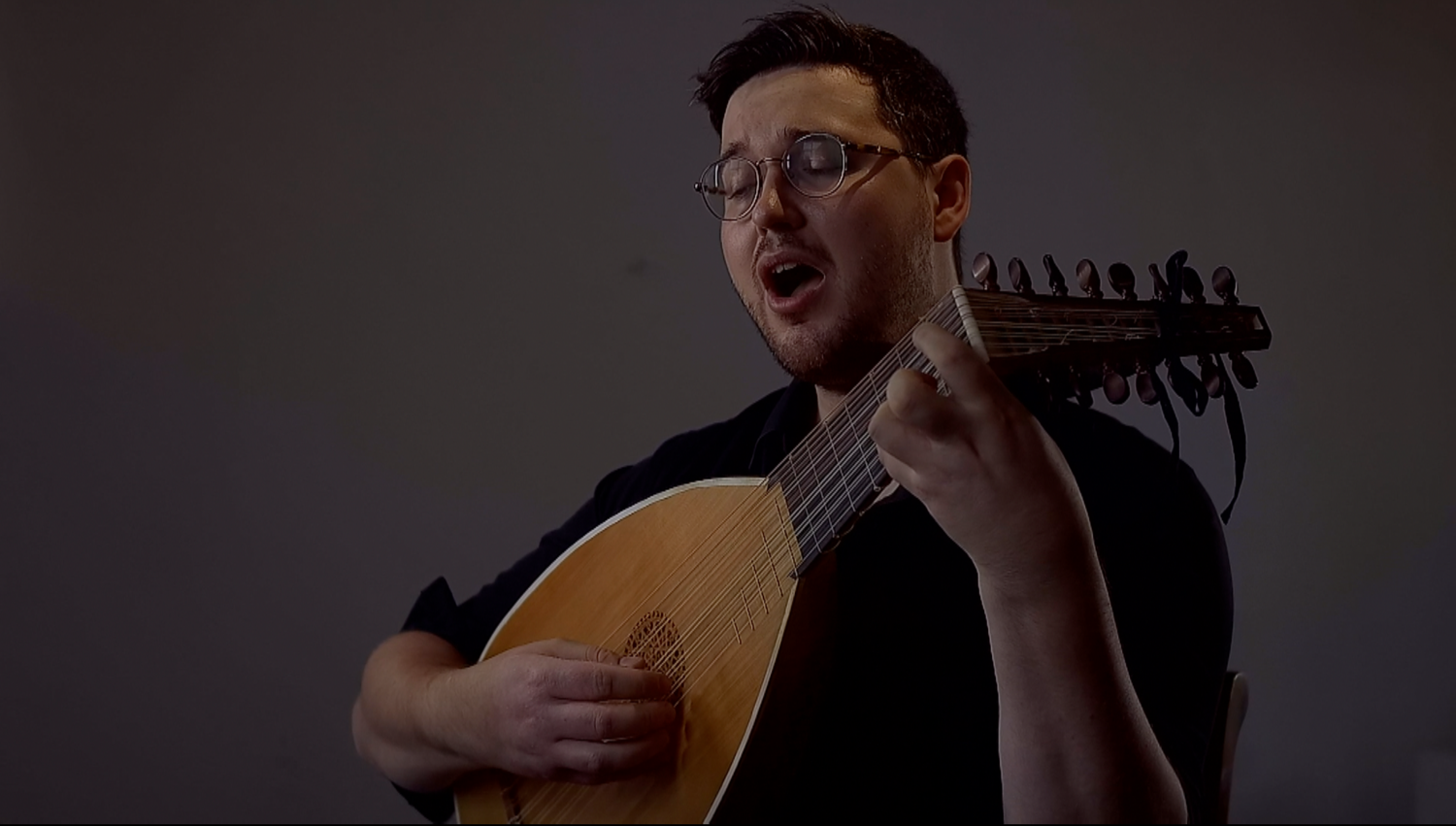
Tim Braithwaite


Isaac Nathan’s Annotations on a Handel Aria and the Swelling and Dying of the Voice
‘The preceding examples receive their colouring from the discrimination of the singer; but a still nicer task remains for him to execute,...
Tim Braithwaite


A Description of ‘The Honorable Entertainement Gieuen to the Queenes Maiestie’ in 1591
‘In the pinnace were three Virgins, which with their Cornets played Scottish Gigs, made three parts in one. There was also in the saide...
Tim Braithwaite


Giovanni Camillo Maffei on Those who ‘Sing the Bass, the Tenor, and any Other Part with Great Ease.’
‘Thus I say, that these voices are born from the matter of the tube [throat]; and by tube [throat] I mean all the parts mentioned above,...
Tim Braithwaite


Leopold von Sonnleithner Remembering in 1857 Johann Vogl’s Singing and Influence on Franz Schubert
‘Without a doubt, [Johann] Michael Vogl stands foremost among those who recognised and promoted Schubert’s genius early on. As far as...
Tim Braithwaite


Denys van Leeuwen on Late Fifteenth-Century Liturgical Singing, Translated by Robert Redman (1533)
‘Whether descant may be commendable in the divine service, and of certain things which ought to be eschewed in song. Like as it is...
Tim Braithwaite


Sylvestro Ganassi on Imitating the ‘Galanteria’ of Singers Through a Trembling of the Fingers (1535)
‘...you would be compelled to be an imitator of the proficient and expert singer, and [this] would entail an instrumental performance...
Tim Braithwaite


Hieronymus de Moravia (late 13th century) on the use of Harmonic Flowers in Chant
‘The harmonic flower [flos harmonicus] is, however, an ornament of the voice or sound, and a very fast and storm-like vibration. Some...
Tim Braithwaite


Thomas Robinson (1603) on ‘Passionate Play’
‘Now you shall have a general rule to grace it, as with passionate play, and relishing it: and note that the longer the time is of a...
Tim Braithwaite


John Arnold on Collective, Florid Psalm Singing (1761)
Of the Several Graces Used in Music: The first and most principle grace, necessary to be learned, is the trill or shake; that is, to move...
Tim Braithwaite


The Performance of Passaggi in Irregular Rhythms According to Lodovico Zacconi (1596)
‘All these things require aptitude, agility, and time, without which nothing can be achieved, and the singer, in using or adopting them...
Tim Braithwaite


Luigi Zenobi on the Role of the Inner Voices in Polyphonic Singing (c.1600)
Since we’ve already seen Zenobi’s comments on the requirements for a soprano (https://www.cacophonyhistoricalsinging.com/post/luigi-zenob...
Tim Braithwaite


Johann Quantz on ‘Allzuhäufigen Trillerns’
§6 ‘Some persons believe that they will appear learned if they crowd an Adagio with many graces, and twist them around in such fashion...
Tim Braithwaite


Lascia Ch’io Pianga (as?) Sung by Signora Isabella in the Opera of Rinaldo
The extract below from William Babbel’s ‘Suits of the most Celebrated Lessons’ (1717) shows a transcription for keyboard of the famous...
Tim Braithwaite


The London Gregorian Choral Association Remembering Church Music in the Early Nineteenth Century
‘Many of us can remember (indeed in some few places it still exists) the old village choir, assisted by the double bass, bassoon, wheezy...
Tim Braithwaite


A Story ‘From the Lips of the Maestro’ on Early Nineteenth-Century Ornamentation
‘Among the old musicians it used to be customary to write a mere outline or suggestion of the voice part. Particularly was this the case...
Tim Braithwaite


Adhémar de Chabannes on French and Italian Articulation (11th c.)
‘All the singers of France have learnt the Italian style that they now call ‘French’, but cannot express perfectly the tremulous...
Tim Braithwaite


Nicola Vicentino on Ensemble Ornamentation (1555)
‘Moreover, such diminutions should be used in [works for] more than four voices, because diminution always causes the loss of numerous...
Tim Braithwaite


Johann Quantz on Articulation for Singers and Exceptions to Inégalité (1752)
’Also excepted is all quick passage-work which must be executed by the human voice, unless it is supposed to be slurred. Since every note...
Tim Braithwaite


Joseph de Lalande's Comparison of French and Italian Register Usage
‘I have said that the tenor of the Italians was the haute-contre of the French; at least the tenors hardly differ if...
Tim Braithwaite
bottom of page